Class 8th Mathematics

Chapter :1 Rational Number

Rational Number:-

A Number That can be Represented As P/Q form where Q≠ 0

Example= 1/2, 3/4 , 0, 2, -1/3

  • Rational Number contains Whole Number, Natural Number, Integers
  • π is an Irrational Number

Irrational Number

Any real number that cannot be expressed as the P/Q form

Example :- π , √11, √21

Tpyes of Rational Number

There are different types of rational numbers. We shouldn’t assume that only fractions with integers are rational numbers. The different

types of rational numbers are:

  • integers like -2, 0, 3 etc.
  • fractions whose numerators and denominators are integers like 3/7, -6/5, etc.
  • terminating decimals like 0.35, 0.7116, 0.9768, etc.
  • non-terminating decimals with some repeating patterns (after the decimal point) such as 0.333…, 0.141414…, etc. These are popularly known as non-terminating repeating decimals

How to Identify Rational Number

In each of the above cases, the number can be expressed as a fraction of integers. Hence, each of these numbers is a rational number. To find whether a given number is a rational number, we can check whether it matches with any of these conditions:

  • We can represent the given number as a fraction of integers
  • We the decimal expansion of the number is terminating or non-terminating repeating.
  • All whole numbers are rational numbers

Rational Number In Form Of Decimal

Decimal Numbers Also come under Rational Number For example 0.3 Because we can Write 0.3 as 3/10 which is A Rational Number

Is 0 a Rational Number…?

Yes 0 is a Rational Number Becuase it can be written As 0/1 which is A Rational Number

Properties Of Rational Number

General Properties of Rational Numbers Like

Closure property, Associative property, Commutative property, Distributive property, identity, Inverse etc.

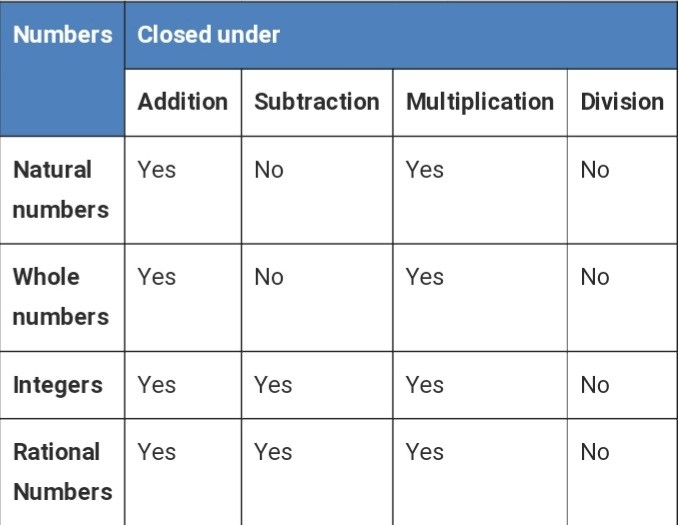
Closure Property

Closure property with reference to Rational Numbers

Closure property states that if for any two numbers a and b, a∗b is also a rational number, then the set of rational numbers is closed under addition.
∗ represents +,−,× 
Associative Property

A set of numbers is said to be associative for a specific mathematical operation if the result obtained when changing grouping (parenthesizing) of the operands does not change the result.

Addition Associatice Property

For exg:- a+(b+c) = c+(a+b)

Subtraction Associative property

Does not Follow

Multiplicative Associative Property

For exg:- a×(b×c) = c×(a×b)

Divisional Associative Property

Does not follow

Commutative Property

The commutative property states that the numbers on which we operate can be moved or swapped from their position without making any difference to the answer. The property holds for Addition and Multiplication, but not for subtraction and division. Let’s see
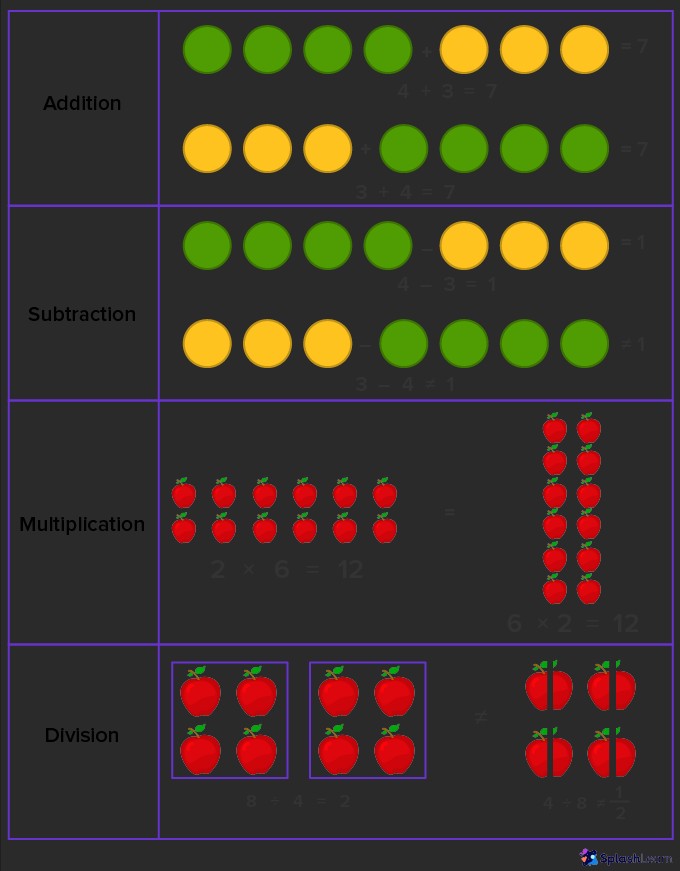
The above examples clearly show that the commutative property holds true for addition and multiplication but not for subtraction and division. So, if we swap the position of numbers in subtraction or division statements, it changes the entire problem. 

So, mathematically commutative property for addition and multiplication looks like this

Commutative Property of Addition:


a + b = b + a; where a and b are any 2 whole numbers


Commutative Property of Multiplication:


a × b = b × a; where a and b are any 2 nonzero whole numbers

Distributive property

If three numbers are a, b and c then a×(b+c)=ab+ac , a×(b-c) = ab-ac

Multiplicative Inverse

Multiplication Inverse Means A fraction and Multiply the Fraction By Reciprocal Of that Fraction So the Result Is 1. For exg

For Fraction a/b the Multiplicative will be b/a so that a/b ×b/a gives 1

Additive Inverse

Additive inverse means A fraction and Add the Same Fraction with opposite of that sign so the result is 0. For exg

a/b+(-a/b) =a/b-a/b =0

Additive Identity

0 is know as Additive Identity beacuse 7+0 =0+7 thus 7=7 No change in Value

Multiplicative Identity

1 is known as multiplicative Identity because 7×1 =1×7 =7=7 the Value Not change

Standard form of Rational Number

Standard form of rational number Means There is No Common Between Numerator and Denominator except 1. For exg

Standard form of 16/8 is 2/1

Reflection of Light

Important Questions & Numericals

Very Short Answer Type Questions

Q1. What happens when a ray of light falls normally on the surface of a plane mirror..?

When a ray of light falls normally (or perpendicularly) on the surface of a plane mirror, this means the angle of incidence is 0o. From the second law of reflection, we know that angle of incidence is equal to the angle of reflection, so the angle of reflection will also be zero. Thus, the light ray will be reflected back along the same path.

Q2. A ray of light is incident on a plane mirror at an angle of 30 degrees. What is the angle of reflection?

We know from the laws of reflection that the angle of incidence is equal to the angle of reflection. Therefore, angle of reflection will be equal to 30 degrees.

Q3. A ray of light strikes a plane mirror at an angle of 40 degrees to the mirror surface. What will be the angle of reflection?

The angle to the mirror surface = 40 degrees

The angle of incidence = 90-40 = 50 degrees

Therefore, angle of reflection = 50 degrees from laws of reflection

Q4. A ray of light is incident normally on a plane mirror. What will be the:

a) angle of incidence

b) angle of reflection?

a) 0 degree

b) 0 degree

Q5. What type of image is formed:

a) in a plane mirror

b) on a cinema screen

a) Virtual image

b) Real image

Q6. What kind of mirror is required for obtaining a virtual image of the same size as the object

Plane mirror is required

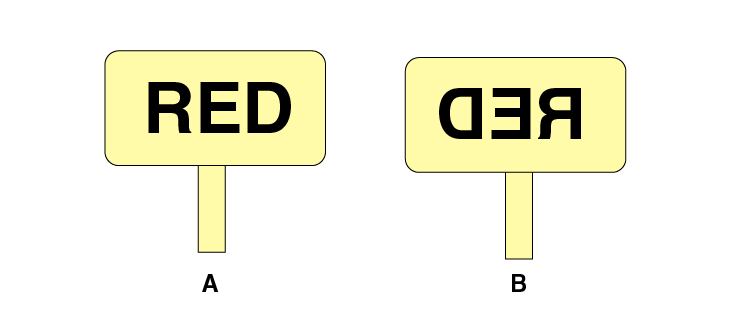
Q7. What is the name of the phenomenon in which the right side of an object appears to be the left side of the image in a plane mirror?

This phenomenon is known as lateral inversion

Q9. If an object is placed at a distance of 10cm in from of a plane mirror, how far would it be from its image?

The image is formed behind the mirror at the distance which is equal to the distance at which the object is placed.

Given,

Distance between object and mirror = 10cm

Distance between mirror and image = 10cm

Therefore, the distance between object and image = 20cm

Q10. Which property of light makes a pencil cast a shadow when it is held in front of a light source

Light travels in a straight line

Q11. The image seen in a plane mirror cannot be formed on a screen. What name is given to this type of image?

Such images are known as virtual images.

Q12. Fill in the blanks:

When light is reflected, the angles of incidence and reflection are …

Answer:

Equal

Q13. State whether the following statement is true or false:

A student says that we can see an object because light from our eyes is reflected back by the object.

Answer:

False.

Q14. Where is the image when you look at something in a mirror?

Answer:

At the back side of the mirror

Q15. A ray of light strikes a plane mirror such that its angle of incidence is 30 degree. What angle does the reflected ray make with the mirror surface?

Angle of incidence = 30 degrees

We know that, angle of incidence = angle of reflection from laws of reflection.

Therefore, angle of reflection = 30 degree

Short Answer Type Questions

Q16. What is the difference between a real image and a virtual image?

Answer:

The difference between a real image and a virtual image is that real image can be obtained on the screen while the virtual image cannot be obtained on the screen.

Example of real image: image formed on the screen in cinemas.

Example of virtual image: image formed by the plane mirror

Q17. The letter F is placed in front of a plane mirror:

a) How would its image look when seen in a plane mirror?

b) What is the name of the phenomenon involved?

b) Lateral inversion

Q18. What is lateral inversion? Explain by giving a suitable example

When an object is placed in front of a plane mirror, the image obtained on the appears to on that opposite that is right side appears to be on the left side. This change in the sides of an object and its mirror image is known as lateral inversion

Q19. Write the word AMBULANCE as it would appear when reflected in a plane mirror. Why sometimes written in this way on the front of an ambulance?

Ambulance is written like the above because when it appears on the rear-view mirror of the vehicle in front can read it the right way because of lateral inversion and make way for it

Q20. What are the important difference between looking at a photograph of your face and looking at yourself in a plane mirror?

The difference between looking at a photograph and looking at yourself is that of lateral inversion. But this doesn’t happen in photographs

Q21. a) A wall reflects light and a mirror also reflects light. What difference is there in the way they reflect light?

b) Which type of reflection of light leads to the formation of images?

a) A wall has a rough surface therefore, when a parallel beam of light falls on it the reflection would be diffused reflection while the surface of the mirror is smooth and the reflection would be regular reflection.

b) Regular reflection.

Q22. What is the difference between regular reflection of light and diffuse reflection of light? What type of reflection of light takes place from:

a) a cinema screen

b) a plane mirror

c) a cardboard

d) still water surface of a lake

Answer:

In regular reflection, the light beams travel parallel to each other and gets reflected in a similar manner while in diffused reflection, the parallel beam of light gets reflected in all the directions.

a) Regular reflection

b) Regular reflection

c) Diffuse reflection

d) Regular reflection

Q23. What can you see in a completely dark room? If you switch on an electric bulb in this dark room as a light source, explain how you could see:

a) the electric bulb

b) a piece of white paper

When we are in a completely dark room, we cannot see anything as there is no light.

a) We can see the electric bulb emitting light

b) White paper is visible it reflects the light back that is falling from the electric bulb

Q24. a) A boy with a mouth 5cm wide stands 2m away from a plane mirror. Where is his image and how wide is the image of his mouth?

b) The boy walks towards the mirror at a speed of 1m/s. At what speed does his image approach him?

Answer:

a) The width of the image of the mouth of the boy is 5cm and the image is formed at 2m behind the mirror.

b) The speed of the boy approaching the mirror will be the same as the image approaching = 1m/s

therefore, the speed = 2+2 = 4 m/s

Q25. a) An extended object in the form of an arrow pointing upward has been placed in front of a plane mirror. Draw a labelled ray diagram to show the formation of its image.

b) State the uses of plane mirror

b) Uses of plane mirrors:

i) It is used for making periscopes.

ii) Used in homes to see ourselves.

iii) Can be used a decorative piece

Ncert class 6 Social Science

Some important points advance level

Latitudes

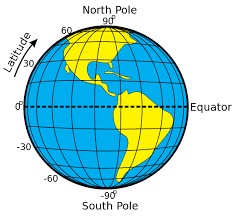
 an imaginary line around the Earth parallel to the equator know as Latitudes

Facts about Latitudes

  • Are know as Parallels
  • Run in East-West Directions
  • Measure distance North- South Directions from the Equator
  • Latitude lines are parallel to each other and never meet
  • The Equator Marks 0° Latitude
  • Cross the prime Meridian At Right Angle 90°
  • Get shorter towards the pole with the Equator as the Large circle
  • The North pole is 90° N latitude
  • The South pole is 90° S Latitude

Longitudes

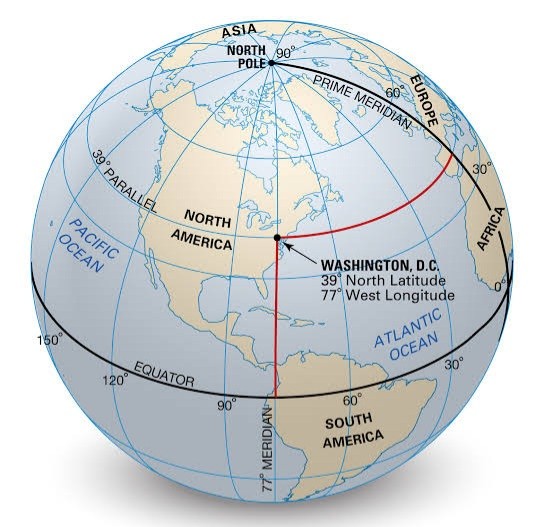
An imaginary line that bisects the globe through the North and South pole.

Facts about longitudes

  • Are known as meridians
  • Run in North- South Direction
  • Measure distance East or West of the prime Meridian
  • Are farthest apart at the Equator and meet at the poles
  • Cross the Equator at Right Angle
  • Lies in the plane that passes through
  • Earth’s Axis
  • Are equal in length
  • Are Halves of Great Circles

Tropic of Cancer

The Tropic of Cancer is a parallel of Latitude on the Earth 23.5° N north of the Equator

Important facts related to Tropic of Cancer

  1. . The Tropic of Cancer passes through eight states in India: Gujarat (Jasdan), Rajasthan (Kalinjarh), Madhya Pradesh (Shajapur), Chhattisgarh (Sonhat), Jharkhand (Lohardaga), West Bengal (Krishnanagar), Tripura (Udaipur) and Mizoram (Champhai). In that order.

Solstice Facts

During Summer Solstice, that is, June 21, sun falls perpendicularly on the Tropic of Cancer. Right Angle means it’s the wrong time to wander outside. Because it is hot, earth is at it’s hottest. And on December 21, the same thing happens on the southern hemisphere, on the Tropic of Capricorn

A River Runs Through It

Mahi River is the only river in India that cuts the Tropic of Cancer twice, first in Madhya Pradesh from where it flows towards Rajasthan and enters Gujarat where it cuts for the second time

Ncert class 6 Social Science

Chapter 2:- Globe: Latitudes and Longitudes

1. Answer the following questions briefly.

(a) What is the true shape of the earth?

(b) What is a globe?

(c) What is the latitudinal value of the Tropic of Cancer?

(d) What are the three heat zones of the Earth?

(e) What are the parallels of latitude and meridians of longitude?

(f) Why does the torrid zone receive a maximum amount of heat?

(g) Why is it 5.30 p.m. in India and 12.00 noon in London?

Answer 1.

(a) The earth is not a perfect sphere. It is slightly flattened at the North and the South Poles and bulges in the middle.

(b) Globe is a miniature form of the Earth.

(c) The latitudinal value of the Tropic of Cancer is 23½° N.

(d) The three heat zones of the Earth are:

  1. Torrid Zone
  2. Temperate Zone
  3. Frigid Zone

(e) All parallel circles from the equator up to the poles are called parallels of latitudes. The lines of reference running from the North Pole to the South Pole are called meridians of longitude.

(f) The torrid zone receives the maximum amount of heat, because it is present between the Tropic of Cancer and the Tropic of Capricorn. The sun is exactly over the head once a year, on all the latitudes between these two tropics.

(g) India is located east of Greenwich at 82°30’E. It is 5 hours and 30 minutes ahead of GMT. So, it will be 5:30 p.m. in India, when it is 12:00 noon in London

2. Tick the correct answers.

(a) The value of the prime meridian is

(i) 90° (ii) 0° (iii) 60°

(b) The frigid zone lies near

(i) the Poles (ii) the Equator (iii) the Tropic of Cancer

(c) The total number of longitudes are

(i) 360 (ii) 180 (iii) 90

(d) The Antarctic Circle is located in

(i) the Northern hemisphere

(ii) the Southern hemisphere

(iii) the Eastern hemisphere

(e) Grid is a network of

(i) parallels of latitudes and meridians of longitude

(ii) the Tropic of Cancer and the Tropic of Capricorn

(iii) the North Pole and the South Pole

Answer 2.

  1. (ii) 0°
  2. (i) the Poles
  3. (ii) 360
  4. (ii) the Southern hemisphere
  5. (i) parallels of latitudes and meridians of longitude

3. Fill in the blanks.

(a) The Tropic of Capricorn is located at _________________.

(b) The Standard Meridian of India is ____________________.

(c) The 0° Meridian is also known as ____________________.

(d) The distance between the longitudes decreases towards___________.

(e) The Arctic Circle is located in the ____________ hemisphere

Answer 3.

(a) The Tropic of Capricorn is located at 23½° S.

(b) The Standard Meridian of India is 82½° E Longitude.

(c) The 0° Meridian is also known as Prime Meridian.

(d) The distance between the longitudes decreases towards the poles.

(e) The Arctic Circle is located in the northern hemisphere

Thank You

Class 10 physics

Chapter 1 Reflection of Light
Revision Notes on Light Reflection

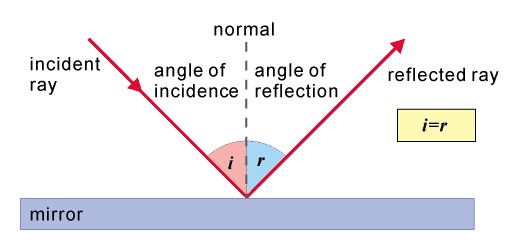
Laws of Reflection

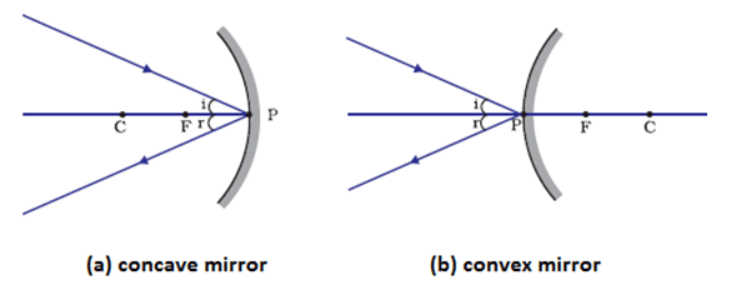
  1. The angle of incidence is equal to angle of reflection
  2. Incident ray, reflected ray and normal all lie in the same plane
Diagram Representation of Reflection of light

Spherical Mirrors

Most common type of curved mirrors are spherical mirrors. Mirrors in which reflecting surface are spherical in shape, is known as spherical mirrors. Reflecting surface of a mirror can be curved inwards or curved outwards. The one which is curved inward is known as concave mirror and the one which curved outwards is known as convex mirror.

Spherical Mirrors

Some Important Terms

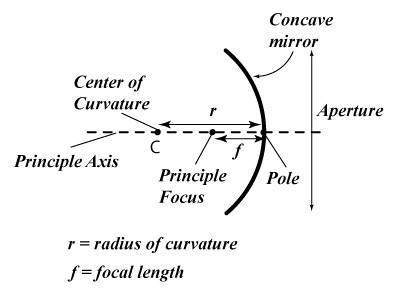
  1. POLE– The centre of the reflecting surface in a spherical mirror is a pole. It is represented by P.
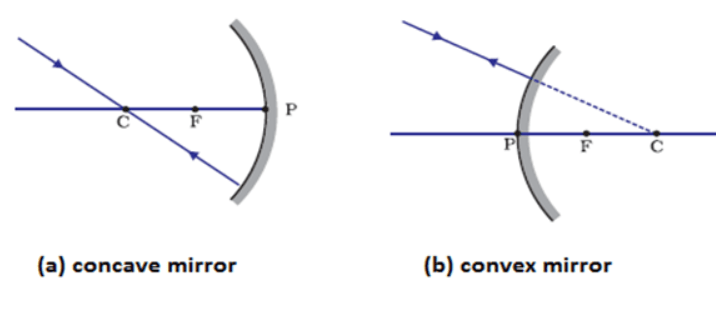
  2. Centre of curvature– Reflecting surface in a spherical mirror has a centre, this is known as centre of curvature. Centre of curvature in convex mirror lies behind the mirror whereas in concave mirror, it lies in front of the mirror.
  3. Centre of curvature– Reflecting surface in a spherical mirror has a centre, this is known as centre of curvature. Centre of curvature in convex mirror lies behind the mirror whereas in concave mirror, it lies in front of the mirror.
  4. Principal axis– Straight line passing through the pole and centre of curvature in a spherical mirror is known as principal axis.
  5. Principal focus– The reflected rays appear to come from a point on the principal axis, this is known as principal focus
  6. Focal length– The distance between the pole and the principal focus in a spherical mirror is known as focal length and it is represented by f.
  7. Aperture– The diameter of the reflecting surface is defined as aperture

Note: Radius of curvature is twice the focal length (R=2f).

Image showing pole, principal axis, centre of curvature, aperture and principal focus in concave mirror

Representations of the images formed by Spherical Mirrors using Ray Diagrams

We draw the ray diagram to locate the image of an object formed. The intersection point of at least two reflected will give the position of image of the point object. The two rays that can be used to draw the ray diagram are

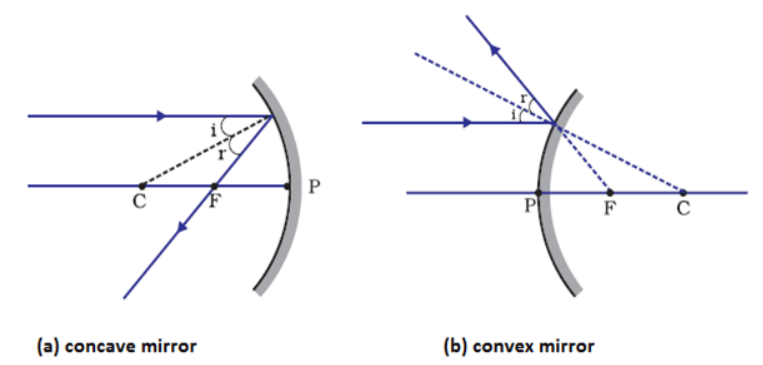
  • A ray parallel to the principal axis should pass through the focus after reflection in case of concave mirror, or appear to diverge in case of convex mirror
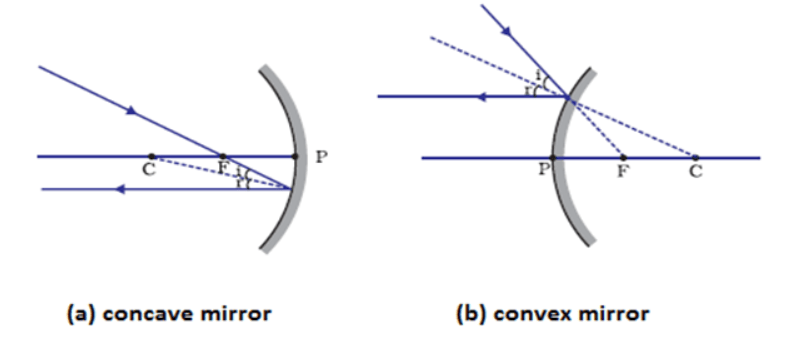
  • A ray passing through the focus of the concave mirror or directed towards the focus in case of convex mirror, should appear parallel to the principal axis after reflection.
  • A ray which is passing through the centre of curvature in a concave mirror or directed in case of convex mirror, should reflect along the same path
  • A ray when incident obliquely to principal axis on a concave or convex mirror is also reflected obliquely.

Image formation by Concave Mirror

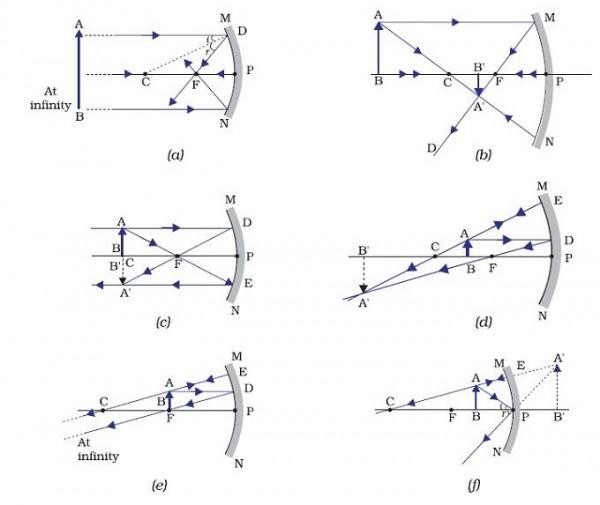
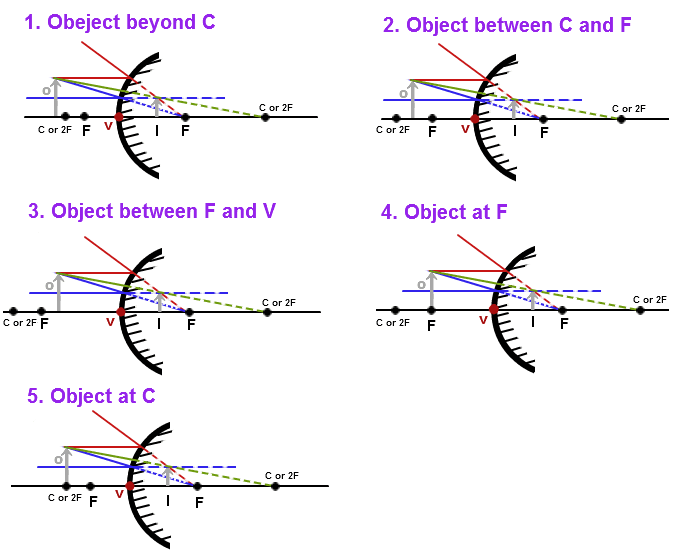
 Ray diagram for the image formation by concave mirror
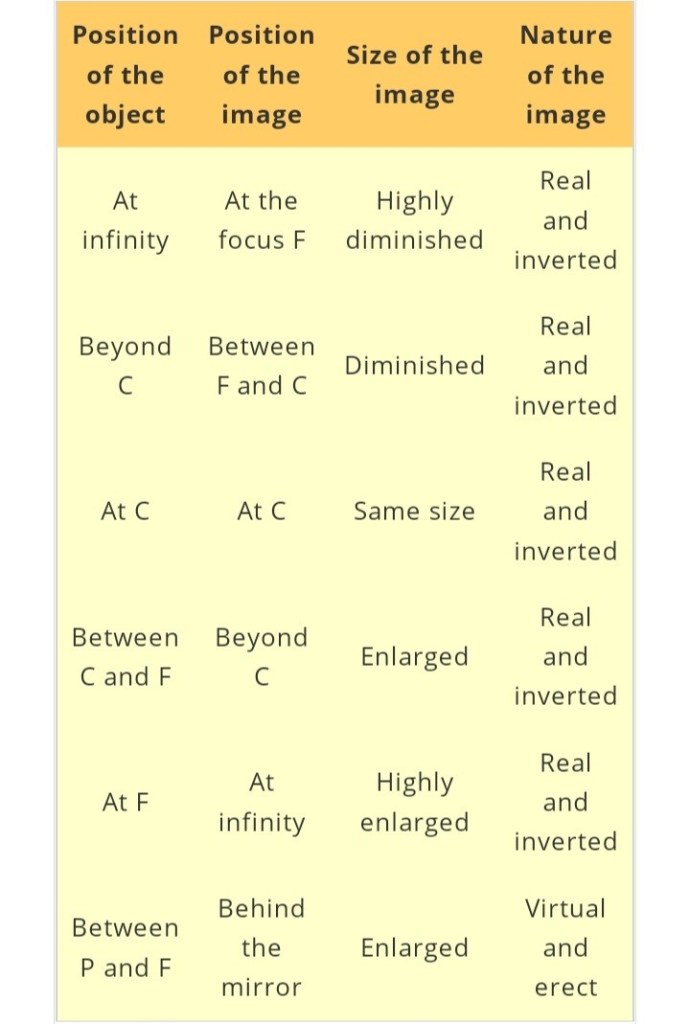
Nature, relative size and position of the image formed by concave mirror

Position, nature, and the size of the image formed by a concave mirror is dependent on the position of the object in relation to P, C and F. Image formed can be real or virtual. The image can also be magnified, diminished or even of the same size.

Uses of Concave Mirror

Used in search lights, torches, head lights of the vehicles. Also used in shaving mirrors. Used by dentists also to see larger image of the teeth. Other use in solar furnaces

Image formation by Convex Mirror

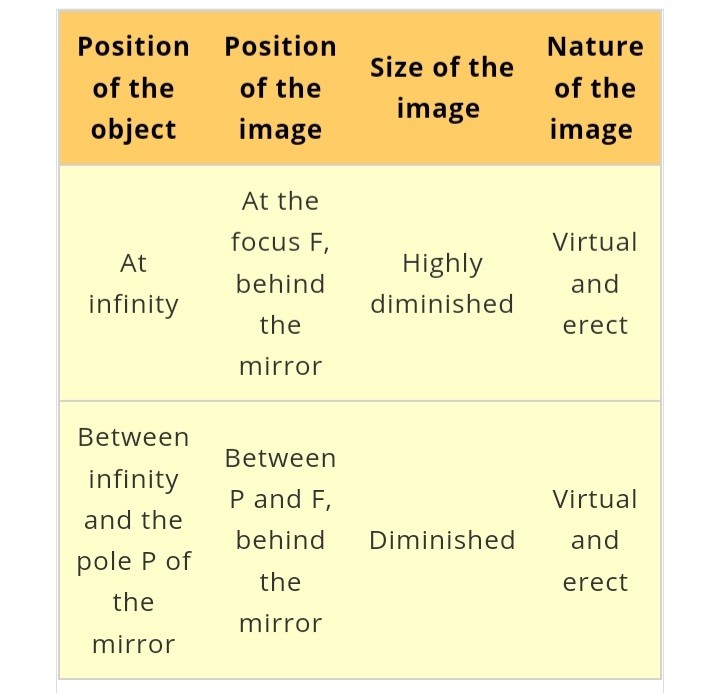
Two positions of the object are considered while understanding the image formed by convex mirror. Either the object should be at infinity or at finite distance from the mirror. Formation of the image by the convex mirror are as follows-

Nature, relative size and position of the image formed by convex mirror

Uses of Convex Mirror

They are used as rear-view mirrors. They are used to see the traffic behind. They are preferred as they give erect but diminished image.

Sign convention for reflection by spherical mirrors

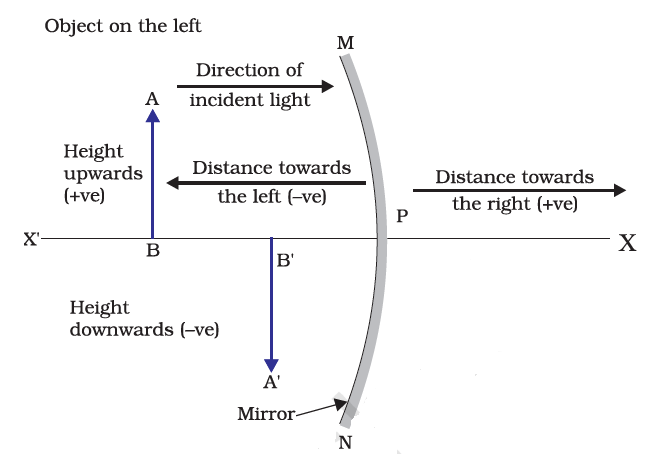
New cartesian sign convention is used to give sign convention used for spherical mirrors. The conventions are as follows-

1. The object is always placed to the left of the mirror.

2. All distances parallel to the principal axis are measured from the pole of the mirror.

3. All the distances measured to the right of the origin (along + x-axis) are taken as positive while those measured to the left of the origin (along – x-axis) are taken as negative.

4. Distances measured perpendicular to and above the principal axis (along + y-axis) will be taken as positive.

5. Distances measured perpendicular to and below the principal axis (along –y-axis) will be taken as negative.

Mirror formula and magnification

Mirror formula and magnification

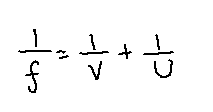
The distance of the object from its pole is known as object distance (u), whereas distance from the pole of the mirror is known as image distance (v). The mirror formula is given by-

distance of the object from its pole is known as object distance

It is applicable for spherical mirrors in all positions of the object.

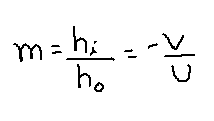
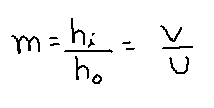
Magnification

It is defined as relative extent to which an object is magnified in comparison to its object size.

Magnification

Where m is the magnification, ho is the height of the object and hi is the height of the image. However, it is to be taken as negative for real images. A negative sign in the value of magnification indicates that the nature of the image is real. A positive sign in the value of the magnification indicates the virtual nature of the image.

Refraction of light

Bending of the light rays as it passes from one medium to another medium is known as refraction of light.

Laws of Refraction

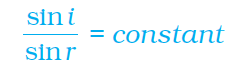
  • Incident ray, refracted ray and normal all lie in the same plane.
  • The ratio of sine of angle of incidence to the sine of angle of refraction is constant. This law is also known as Snell’s law of refraction. 
Laws of refraction

Refractive Index

When light passes from one medium to another medium, it changes its direction. The extent to which the direction changes is expressed in terms of refractive index. The value of refractive index is dependent on the speed of light in two media. v1 is the speed of light in medium 1 and v2 is the speed of light in medium 2. The refractive index of medium 2 with respect to medium 1 is represented as n21.

Refractive index

If medium 1 is vacuum or air, then the refractive index of medium 2 with respect to vacuum is known as absolute refractive index of the medium.

vacuum or air, then the refractive index of medium

Where c is the speed of light in air, v is the speed of light in other medium and nm is the refractive index of the medium.

Refraction by Spherical Lenses

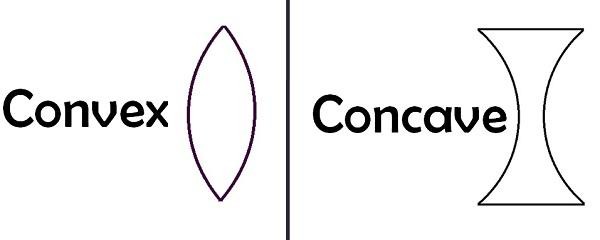
Lenses are defined as transparent materials which are bounded by two surfaces, out of which one or both can be spherical. When both the two spherical surfaces bulge outwards, it is known as convex lens. They converge the light rays. When the two spherical surfaces bulge inwards, they are known as concave lens. They are known as diverging lens. The centre of these spherical surfaces is known as centre of curvature, represented by C.

Any imaginary straight line passing through the centre of curvature of a lens is known as principal axis. The centre point is known as optical centre. The effective diameter of the spherical lens is known as aperture.

Image formation by lenses

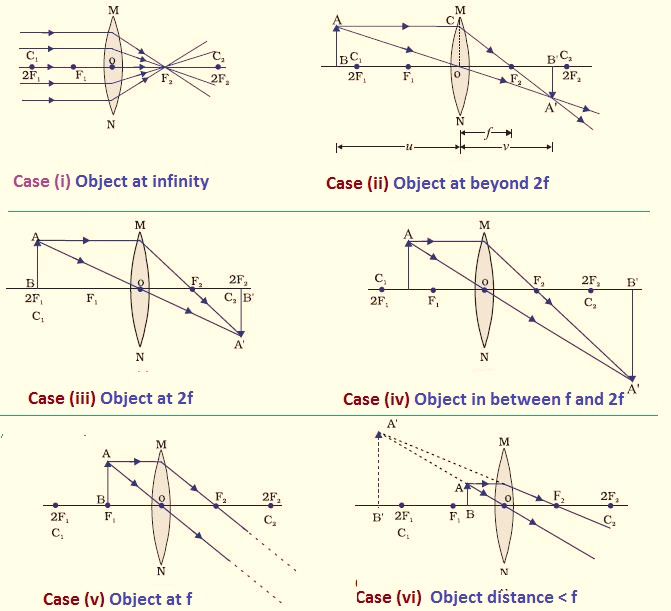
Nature, relative size, and position of the image formed by convex lens are given below in the form of table-

Position of the object

Position of the image

Relative size of the image

Nature of the image

At infinity

At focus F2

Highly diminished

Real and inverted

Beyond 2F1

Between F2 and 2F2

Diminished

Real and inverted

At 2F1

At 2F2

Same size

Real and inverted

Between F1 and 2F1

Beyond 2F2

Enlarged

Real and inverted

At focus F1

At infinity

Infinitely large

Real and inverted

Between focus Fand optical centre O

On the same side of the lens as the object

Enlarged

Virtual and erect

Image formation in Lenses using Ray Diagrams

Rules for drawing the ray diagrams are as follows-

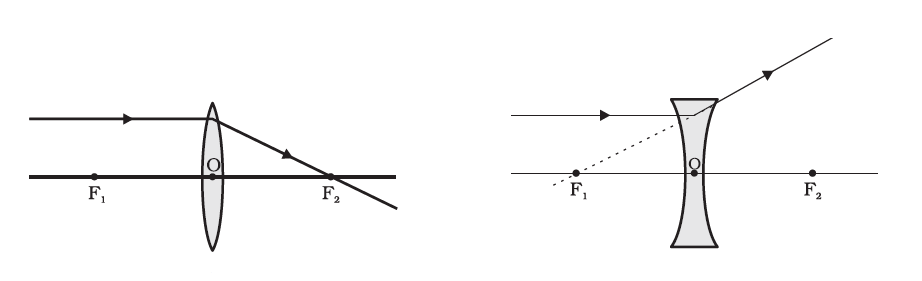
1. A ray of light which is parallel to the principal axis will pass through the principal focus after refraction from the convex lens.

Image formation in lenses using ray diagrams

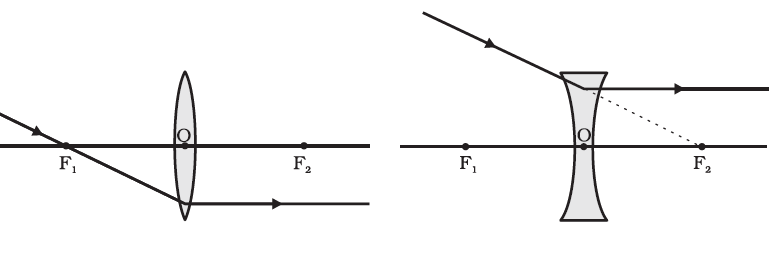
2. A ray of light passing through principal focus, will emerge parallel to principal axis after refraction from the convex lens.

ray of light passing through principal focus

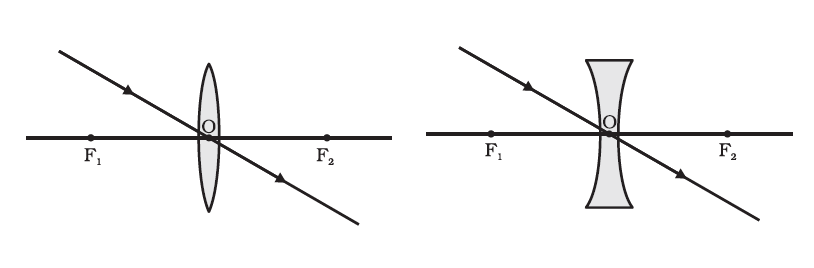
3. A light ray passing through optical centre will emerge out without any deviation.

light ray passing through optical centre will emerge out without any deviation

Image formed by the Convex Lens for various positions of the object

Image formed by the convex lens for various positions of the object

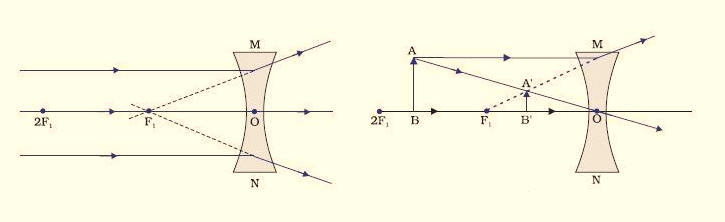
Image formed by the Concave Lens

Image formed by the concave lens

Sign convention for Spherical Lenses

Sign convention are used as similar for spherical mirrors. But the focal length of a convex lens is positive and that of concave lens in negative.

Lens formula and magnification

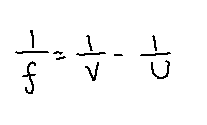
The lens formula is given as

Lens formula and magnification

Where, u is object distance, v is image distance and f is focal length.

The ratio of the height of an image to the height of an object is defined as magnification.

Magnification is represented by m, h0 is the height of the object and hi is the height of the image.

Power of a lens

Power of a Lens

The degree of convergence or divergence of light rays is expressed in terms of power. So, the reciprocal of focal length is known as its power. It is represented by letter P. The power is given by-

P = 1/f

The SI unit of power is dioptre. It is represented by D. Power of concave lens is negative and power of convex lens is positive.

NCERT Book Solutions Class 6 Geography Chapter 1

Chapter:-1 The Earth In The Solar System

1. Answer the following questions briefly

(a) How does a planet differ from a star?

(b) What is meant by the ‘Solar System’?

(c) Name all the planets according to their distance from the sun.

(d) Why is the Earth called a unique planet?

(e) Why do we see only one side of the moon always?

(f) What is the Universe?

(a) The Difference between the Stars and planets are given below

  • Stars:-

Some celestial bodies are very big and hot. They are made up of gases and they have their own heat and light. These celestial bodies are called stars

Example :- The Sun

  • Planet:-

Some celestial bodies do not have their own heat and light. They are lit by the heat and light of the stars. These bodies are called planets.

Example:- Mercury, Earth and Mars etc.

(b)The sun, the eight planets, satellites and some other celestial bodies known as meteoroids and asteroids form the solar system.

(c) The planets arranged as per their distance from the sun are – Mercury, Venus, Earth, Mars, Jupiter, Saturn, Uranus and Neptune.

(d)The earth is a unique planet of the solar system because:

  1. Conditions favourable to support life are probably found only on the earth.
  2. The earth is neither too hot nor too cold. It has water and air, which are very essential for our survival.

(e)We always see only one side of the moon, because the moon moves around the earth in about 27 days and it takes exactly the same time to complete one spin.

(f)Millions of galaxies together form the Universe. A galaxy is a huge system of billions of stars and clouds of dust and gases

2. Tick the correct answer.

(a) The planet known as the “Earth’s Twin” is

(i) Jupiter (ii) Saturn (iii) Venus

(b) Which is the third nearest planet to the sun ?

(i) Venus (ii) Earth (iii) Mercury

(c) All the planets move around the sun in a

(i) Circular path (ii) Rectangular path (iii) Elongated path

(d) The Pole Star indicates the direction to the

(i) South (ii) North (iii) East

(e) Asteroids are found between the orbits of

(i) Saturn and Jupiter (ii) Mars and Jupiter (iii) The Earth and Mars

Answer.

  1. (iii) Venus
  2. (ii) Earth
  3. (iii) Elongated path
  4. (ii) North
  5. (ii) Mars and Jupiter

3. Fill in the blanks.

(a) A group of ________ forming various patterns is called a ________.

(b) A huge system of stars is called________.

(c) ________is the closest celestial body to our earth.

(d) ________is the third nearest planet to the sun.

(e) Planets do not have their own________ and ___________________.

Answer.

(a) A group of stars forming various patterns is called a constellation.

(b) A huge system of stars is called a galaxy.

(c) Moon is the closest celestial body to our earth.

(d) Earth is the third nearest planet to the sun.

(e) Planets do not have their own heat and light

Thank you

Jai Hind

Class 10th Ncert Chapter 1

Mathematics

Exercise 1.2

Ex 1.2 Class 10 Maths Question 1.
Express each number as a product of its prime factors:

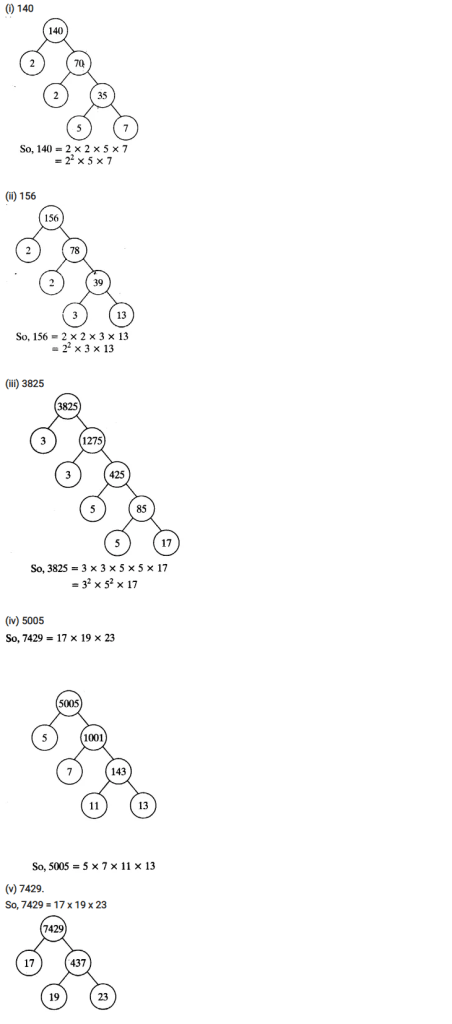
(i) 140
(ii) 156
(iii) 3825
(iv) 5005
(v) 7429

Ex 1.2 Class 10 Maths Question 2

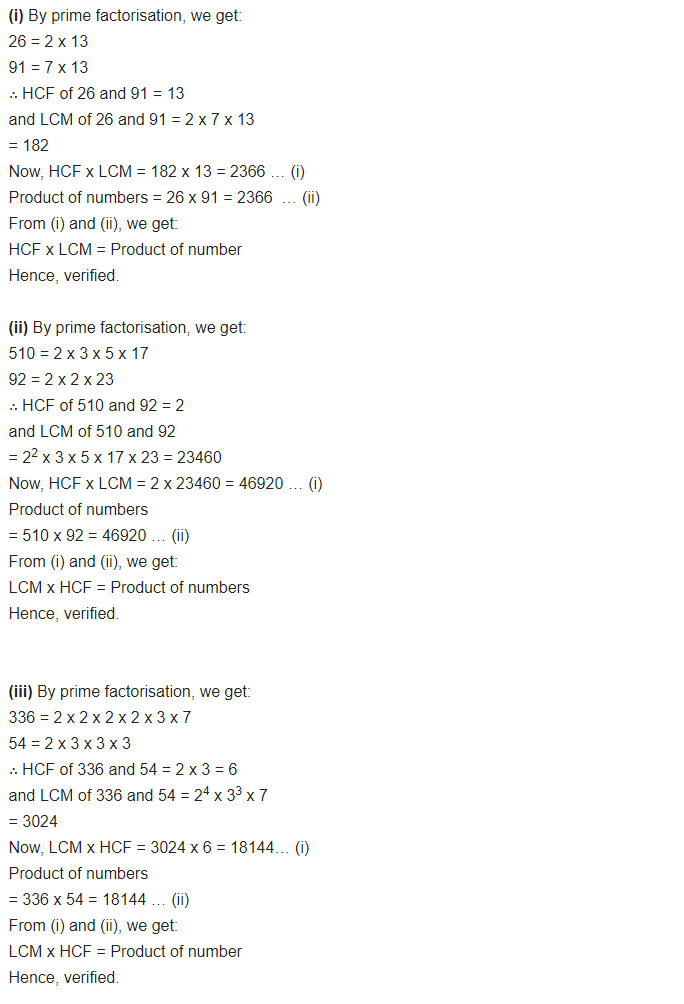
Find the LCM and HCF of the following pairs of integers and verify that LCM x HCF = Product of the two numbers:
(i) 26 and 91
(ii) 510 and 92
(iii) 336 and 54

Ex 1.2 Class 10 Maths Question 3

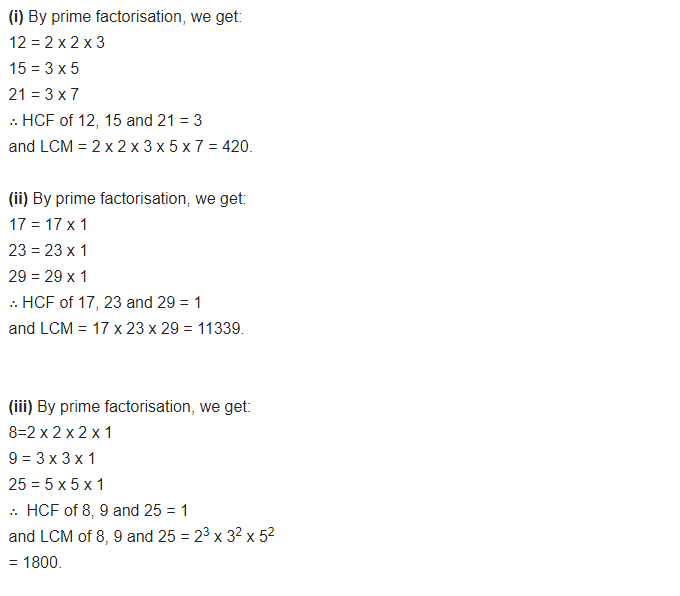
Find the LCM and HCF of the following integers by applying the prime factorization method:
(i) 12, 15 and 21
(ii) 17, 23 and 29
(iii) 8, 9 and 25

Ex 1.2 Class 10 Maths Question 4

Given that HCF (306, 657) = 9, find LCM (306, 657).

Ex 1.2 Class 10 Maths Question 5.
Check whether 6n can end with the digit 0 for any natural number n.

Class 10 Ncert Chapter 1

Chemistry

(7) Write the balanced chemical equation for the following reactions.

Calcium hydroxide + Carbon dioxide —-> Calcium carbonate + Water

Zinc + Silver nitrate —-> Zinc nitrate + Silver

Aluminium + Copper chloride —-> Aluminium chloride + Copper

Barium chloride + Potassium sulphate —-> Barium sulphate + Potassium chloride

Solution:

2Ca(OH)+ 2CO→ 2CaCO+ 2H2O

Zn + 2AgNO→ Zn(NO3)+ 2Ag

2Al + 3CuCl→ 2AlCl+ 3Cu

BaCl+ K2SO→ BaSO+ 2KCl

0

8. Write a balanced chemical equation for the following and identify the type of reaction of each case

KBr + BaI→ KI + BaBr2

ZnCO→ ZnO + CO2

H+ Cl → HCl

Mg + HCl → MgCl+ H2

Solution

2KBr + BaI→ 2KI + BaBr2 (Double Displacement Reaction)

ZnCO→ ZnO + CO2 (Decomposition Reaction)

H2 + Cl → 2HCl (Combination Reaction

Mg + 2HCl → MgCl+ H2 (Displacement Reaction)

1

9. What is meant by exothermic and endothermic reactions? Give examples

An endothermic reaction occurs when energy is absorbed from the surroundings in the form of heat.(Example: Photosynthesis, melting of ice, evaporation). Conversely, an exothermic reaction is one in which energy is released from the system into the surroundings. (Example: Explosions, concrete setting, nuclear fission and fusion).

10. Why is respiration considered to be an exothermic reaction?

For the survival of life, we require energy. We obtain this energy from the food we eat. The food molecules, through the process of digestion, is broken down into a simpler molecule like glucose. These substances come in contact with the Oxygen present in our body cells to form Carbon dioxide and water along with a certain amount of energy (Respiration process). Since the energy is in the form of heat (that maintains our body temperature) the respiration is considered to be an exothermic reaction. The reaction taking place is:

C6H12O+ 6O→ 6CO+ 6H2O + Energy

11. Why are decomposition reactions called the opposite of Combination reactions? Write equations for decomposition reactions

Combination reaction is said to be the reaction between two or more molecules to form a larger molecule; whereas the decomposition reaction is defined as the splitting of larger molecules into two or more smaller molecules. This essentially explains that the decomposition reaction is the opposite of the combination reaction.

In most of the cases the decomposition reaction is endothermic since heat from the surrounding or induced heat is used to break the bonds of the larger molecule. Few examples of decomposition reactions are:

ZnCO3 → ZnO + CO2

CaCO3 + Energy → CaO + CO2

2HgO → 2Hg + O2

14. In the refining of Silver, the recovery of silver from Silver nitrate solution involves displacement reaction by Copper metal. Write down the reaction involved.

Solution

Cu(s) + 2AgNO3(aq) → Cu(NO3)2(aq) + 2Ag(s)

15. What do you mean by a precipitation reaction? Explain by giving examples.

When two solutions containing soluble salts are combined, a double displacement reaction takes place in which the ions are exchanged between the compounds. When one of such compounds formed is in solid form (that is insoluble in aqua) then it settles down at the bottom of the container. This solid is known as the precipitate and the respective reaction is termed as the precipitation reaction. Few examples of precipitation reactions are:

CdSO4(aq) + K2S(aq) → CdS(s) + K2SO4(aq)

2NaOH(aq) + MgCl2(aq) → 2NaCl(aq) + Mg(OH)2(s)

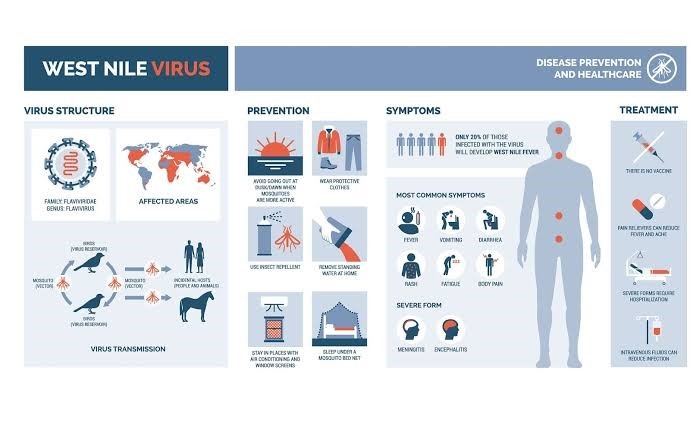
West Nile Virus Infections

Context

A man who was undergoing treatment for West Nile fever in Kerala’s Thrissur succumbed to it recently.

About the West Nile Virus

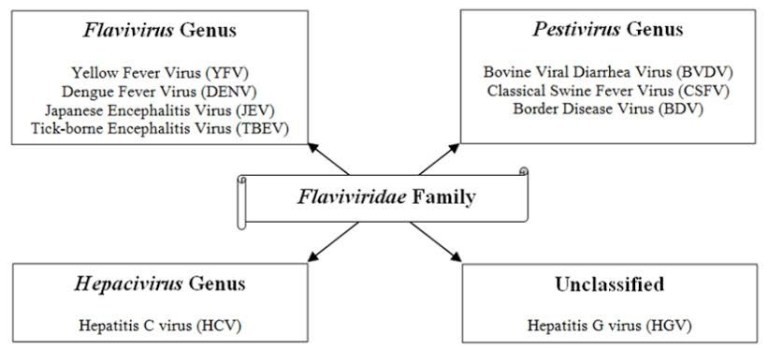
  • It is a member of the flavivirus genus and belongs to the Japanese encephalitis antigenic complex of the family
  • It is a single-stranded RNA virus.
  • It was first isolated in a woman in the West Nile district of Uganda in 1937.
  • It is commonly found in Africa, Europe, the Middle East, North America and West Asia

Older people, children and those with weakened immune systems are most at risk.

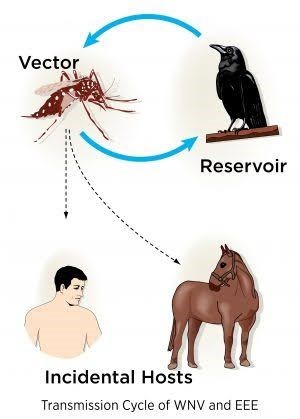
Transmission:

It spreads from birds to humans with the bite of an infected Culex mosquito

Design a site like this with WordPress.com
Get started